
Back to: HIV Stigma Workshop Kit
When you think about it, there are so many interpersonal dynamics where conflict could occur in the larger picture of harm reduction and other healthcare services. It could be during interaction among people who are peers & other harm reduction workers, community members accessing care, and other care providers.
Why it matters – In harm reduction services, how conflict and challenge are handled can either reduce stigma or reinforce it. Handling situations with care and mutual respect shows people they are valued, even when behaviours are difficult.
Conflict is possible within any human interaction. The way we handle it can either reinforce stigma or reduce it. Conflict is often where stigma surfaces most clearly through judgment, power struggles, or defensive reactions. By handling conflict calmly and respectfully, we can turn tense moments into opportunities for trust.
Challenging behaviour shows up in many ways such as being belligerent, physically aggressive, outwardly defiant. And as we know, negative attitudes and discrimination in themselves is challenging behaviour because of the negative impacts. Interpersonal conflict can show up as strong differences in opinion, expression of distrust, or even in the form of coercion & manipulation.
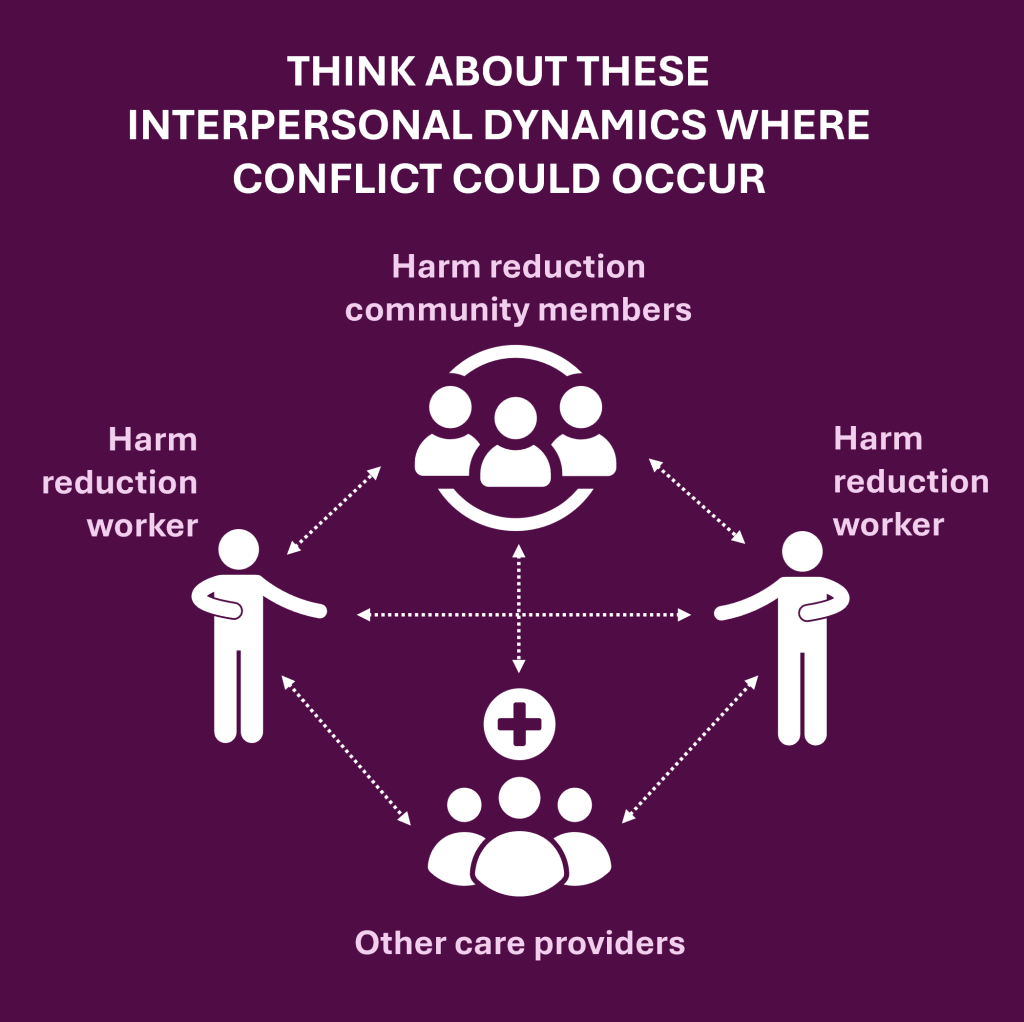
Conflict and challenging behaviour can present itself in many different ways.
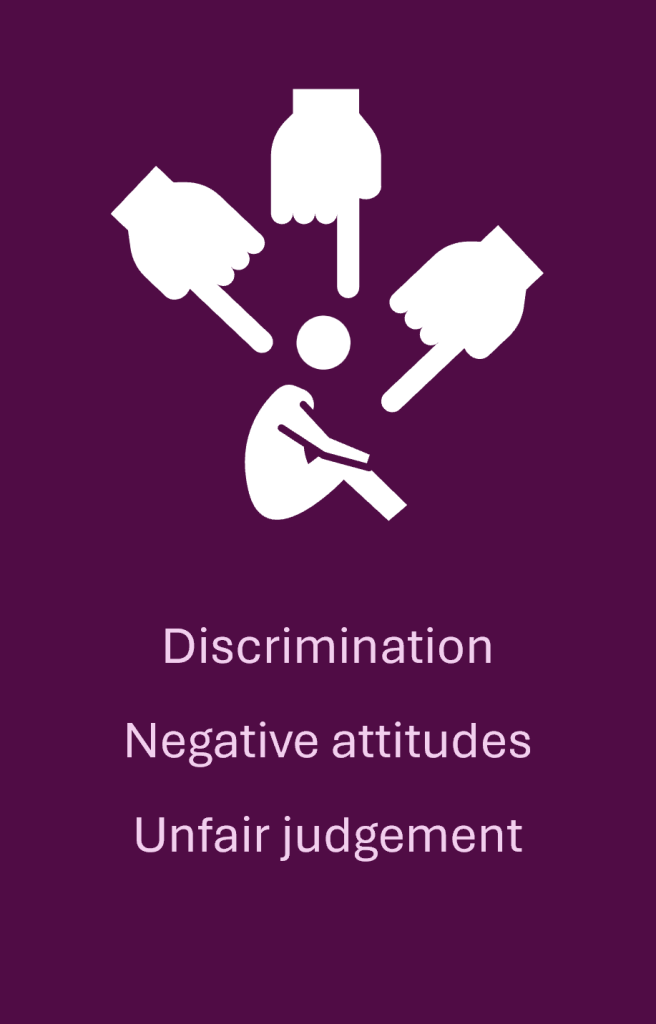
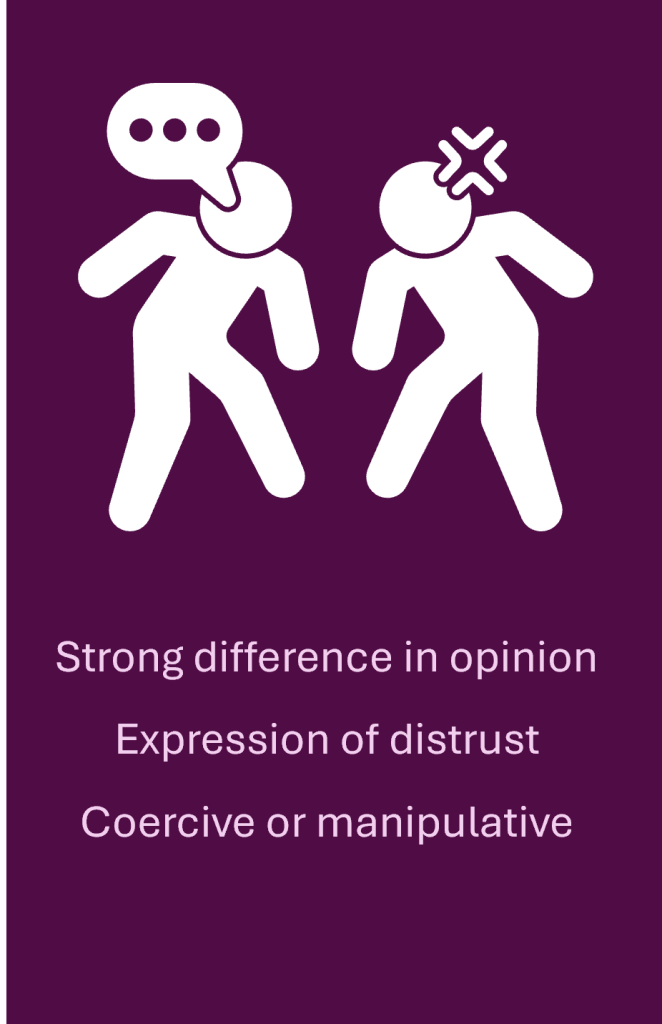
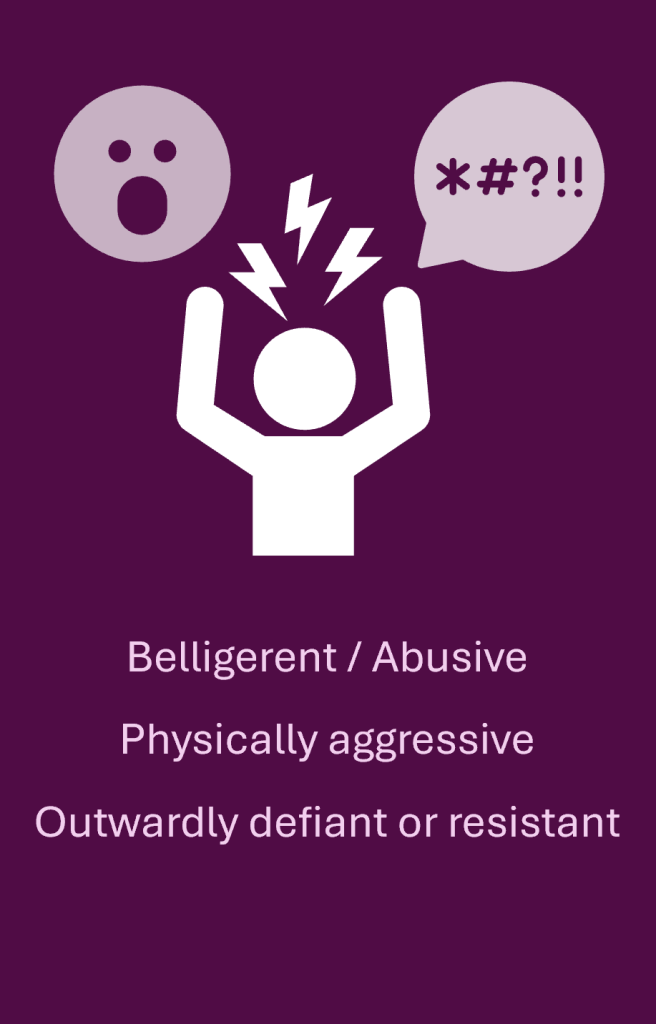
Conflict and challenging behaviour can negatively affect the wellness of the people who receive and provide harm reduction care.
How to handle conflict and challenging behaviour
1. HANDLING IT CASE BY CASE
Treat each conflict or challenging behaviour as a unique mix of factors and context to avoid applying a one-size-fits-all response or approach. There are many factors beneath the surface of a situation that might be unknowingly contributing to the conflict or challenging behaviour.
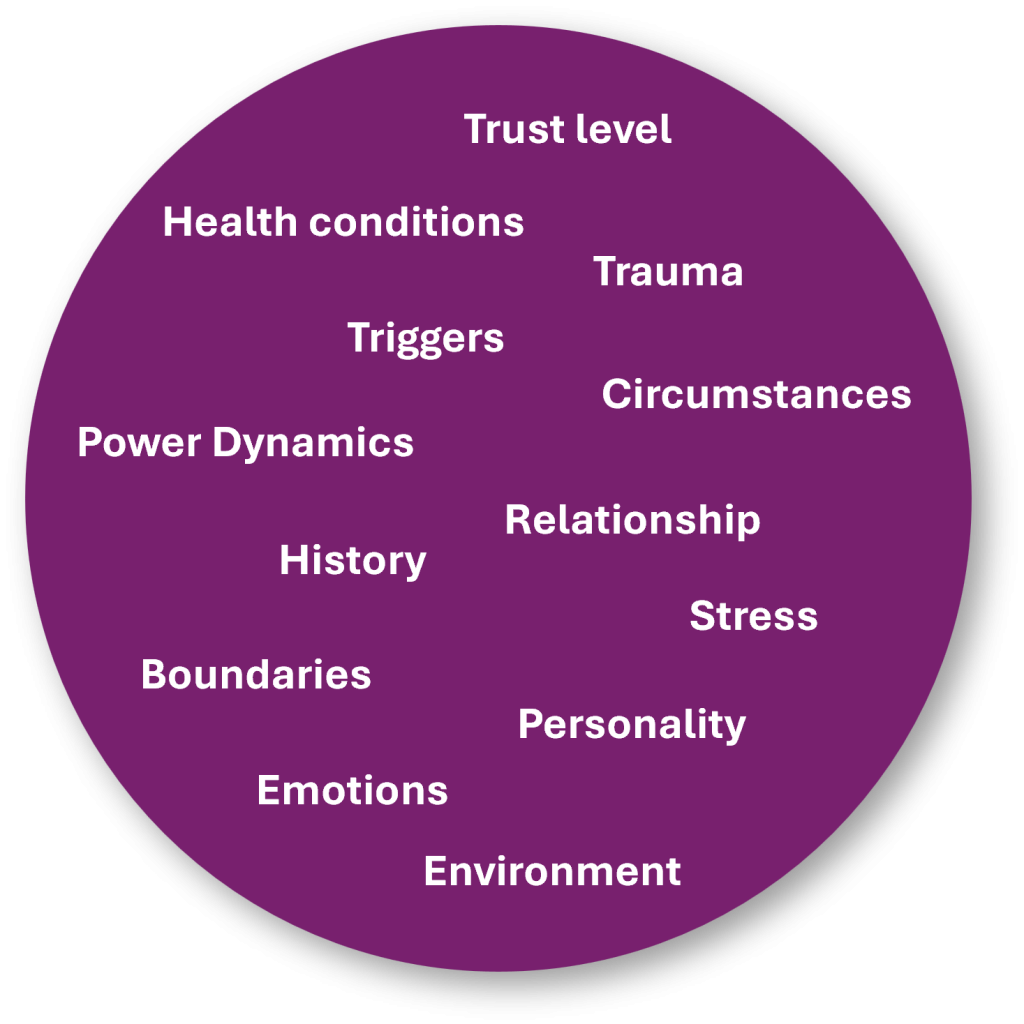
Treat each conflict or challenging behaviours as a unique mix of factors and context to avoid applying a one-size-fits-all response or approach.
What personal process might work for you? It can be helpful to think about how you might personally handle a situation. From a broad perspective, you could try this:
Approach
Initiate contact calmly and respectfully, creating a safe opening for dialogue rather than escalating tension.
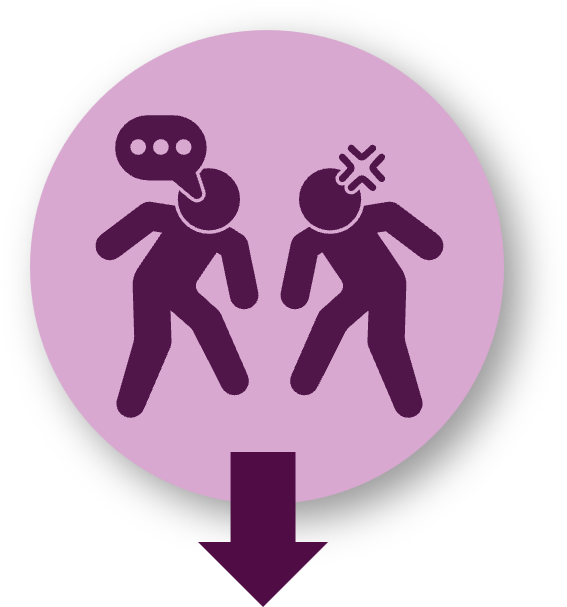
Acknowledge
Recognize and validate each person’s perspective or feelings without judgment to build trust and reduce defensiveness.
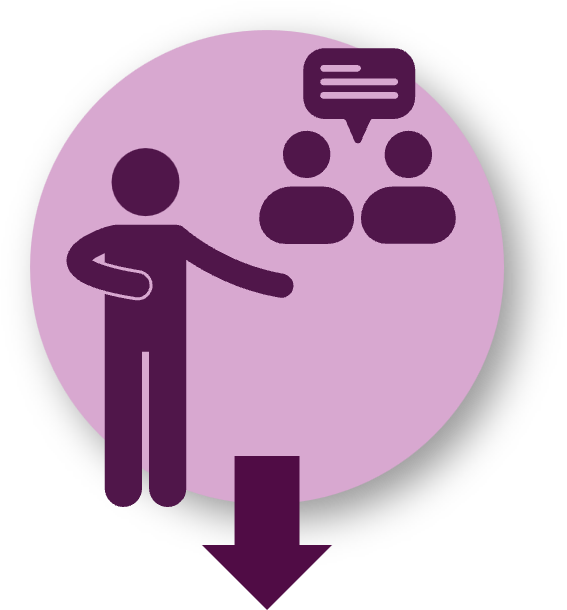
Suggest or Facilitate
Guide the conversation toward shared understanding and practical next steps that meet as many needs as possible.

Follow-up
Check back in after the interaction to reinforce agreements, address anything unresolved, and support accountability.

2. CONNECT ON COMMON GROUND
Identifying and aligning to shared goals, values, or principles to build understanding despite differing perspective is connecting on common ground is about. Connecting on common ground means focusing on what we all share. Things like wanting better health for community members, working together to reduce harm, committing to inclusion, and meeting peers where they are. These shared values help reduce stigma and strengthen relationships.

* WANTING BETTER HEALTH OUTCOMES FOR PEOPLE
* THE CRITICAL IMPORTANCE OF REDUCING HARM TOGETHER
* COMMITMENT AND RESPONSIBILITY OF INCLUSION
* PEERS MEETING EACH OTHER WHERE THEY’RE AT
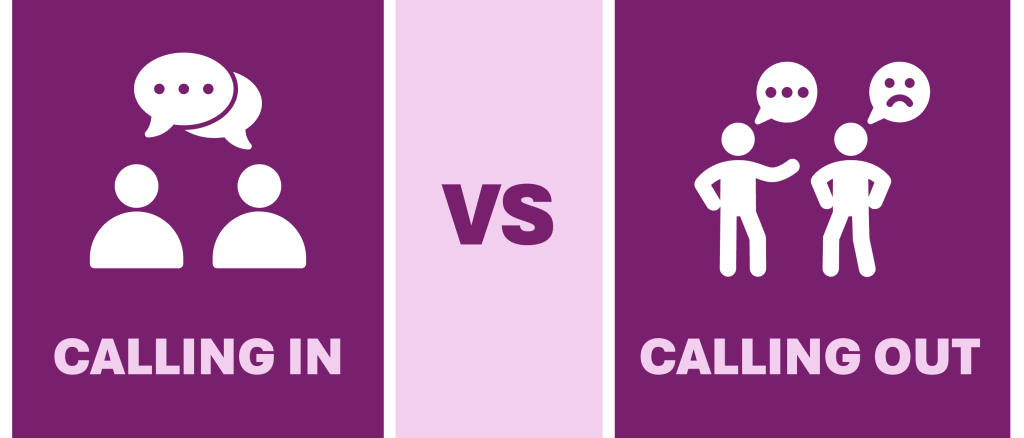
3. CALLING IN VS. CALLING OUT
It’s about choosing between publicly addressing harmful behaviour (“calling out”) or privately inviting reflection and dialogue (“calling in”), depending on circumstance.
CALLING IN – is more about respectfully engaging someone who appears to be enacting stigma with empathy and understanding to address harmful behavior. Use language in a constructive, private, or non-confrontational way and foster dialogue that encourages reflection with an invitational, reflective tone.
CALLING OUT – is more about publicly addressing harmful behavior or language to hold someone accountable and challenge stigma in a more direct, often urgent, manner. It’s about drawing attention to the issue and prompting action. Use language that is more direct and firmer.
| EXAMPLES OF CALLING IN | EXAMPLES OF CALLING IN |
| “Why do you believe that to be true?” | “Keeping in mind our policies, you might want to choose different words.” |
| “How might someone else see it differently?” | “I want to stop you right there.” |
| “How might the impact of your words differ from your intent?” | “What you said could be harmful.” |
| (invitational and reflective tone) | (direct and firm tone) |
EXPLORE MORE
Introduction to Conflict Management and Negotiation (Allison Free Online Courses)
Free training material & self-study guide (Conflict Resolution Network)
Conflict Management Free Course with Certificate (Great Learning)