
Back to: HIV Stigma Workshop Kit
This section highlights some of the big issues that come up again and again in HIV care and stigma reduction. Topics like advocacy, disclosure, privacy and confidentiality, and trauma-informed practice cut across HIV, substance use, and other health concerns. They are called “hot topics” because they spark important conversations, raise challenging questions, and shape how care is experienced in real life. Understanding these areas helps us provide more respectful, safe, and effective support in community settings.
The hot topics we will cover in this section:
- Privacy and Confidentiality
- Disclosure and Stories of Lived Experience
- Advocacy
- Trauma-informed Care
Privacy and Confidentiality
As a pair, privacy & confidentiality build trust and create a safer dialogue space by protecting the important personal information of people who access harm reduction services. PRIVACY is a person’s right to control what personal information they share and with whom. CONFIDENTIALITY is the responsibility of the worker or service provider to protect the information that has been shared and not disclose it without consent.
A harm reduction worker can build trust and create a safer dialogue space to talk about HIV by protecting people’s important personal information. Examples of personal information can include:


REASONS WHY A PERSON MIGHT CHOOSE TO BE MORE…
| PRIVATE | PUBLIC |
| To avoid potential stigmatizing judgement that can include discrimination. | To set the example by standing up to say why stigmatizing judgement and discrimination is not acceptable. |
| Concern about how people might react or respond. | Can feel empowering to demonstrate self-confidence and bravery in disclosing. |
| Increased space for yourself to form a relationship with your own story. | Can help build trust with other peers to encourage them to share their story. |
EXPLORE MORE
Reducing Stigma and Discrimination through protection of privacy and confidentiality (CPHA)
HIV and AIDS: Monitoring (Government of Canada)
Disclosure and Stories of Lived Experience
Disclosure is simply defined as sharing personal information with others, often about something private or sensitive, when you choose or need to. In the context of harm reduction and community-focused work, it means the sharing of personal information like a person’s HIV status.
DISCLOSURE BY OBLIGATION
This form of disclosure relates to Canada’s legal framework around HIV non-disclosure. People may be legally required to disclose HIV status in certain circumstances like when there is a “realistic possibility of transmission”. It is important for people living with HIV to know their rights and obligations.
DISCLOSURE BY FREEDOM OF CHOICE
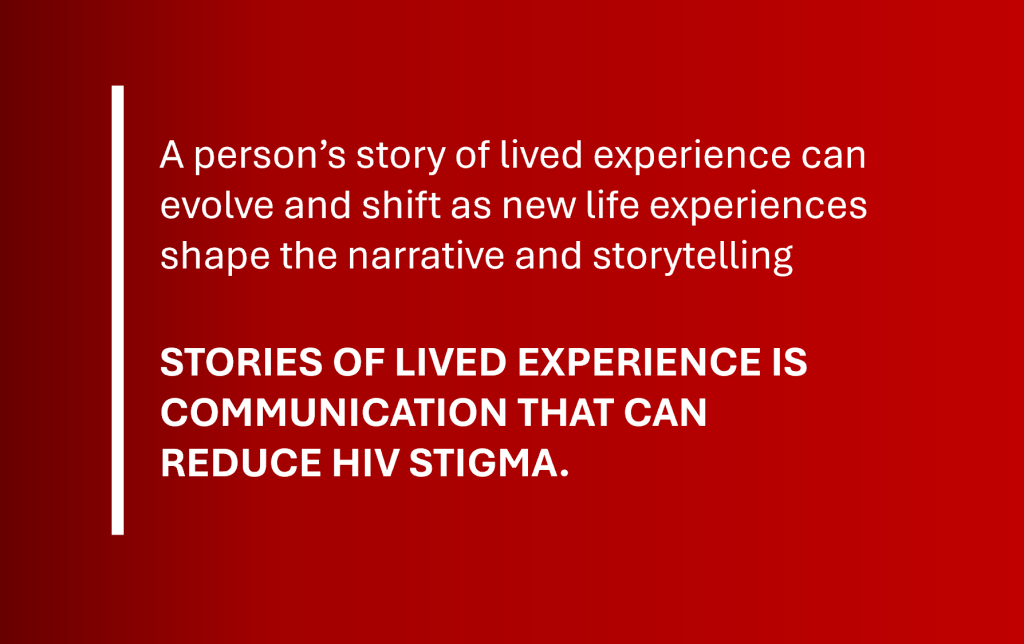
When done in safe and supportive contexts it can be empowering and build stronger connections in personal and community relationships. At the same time, people have the right to privacy and the freedom to decide if, when, and how they wish to disclose. A person telling their story can be a powerful way of disclosing.
Why stories of lived experience of HIV and other aspects of a person are important:


EXPLORE MORE
The Criminalization of HIV Non-disclosure in Canada (HIV Legal Network)
Whiteboard video: Stigma Experiences of people living with HIV in BC (PAN)
Women and HIV: A Disclosure Toolkit (WHAI)
The Positive News (OHTN)
Disclosure Resources (CATIE)
Advocacy
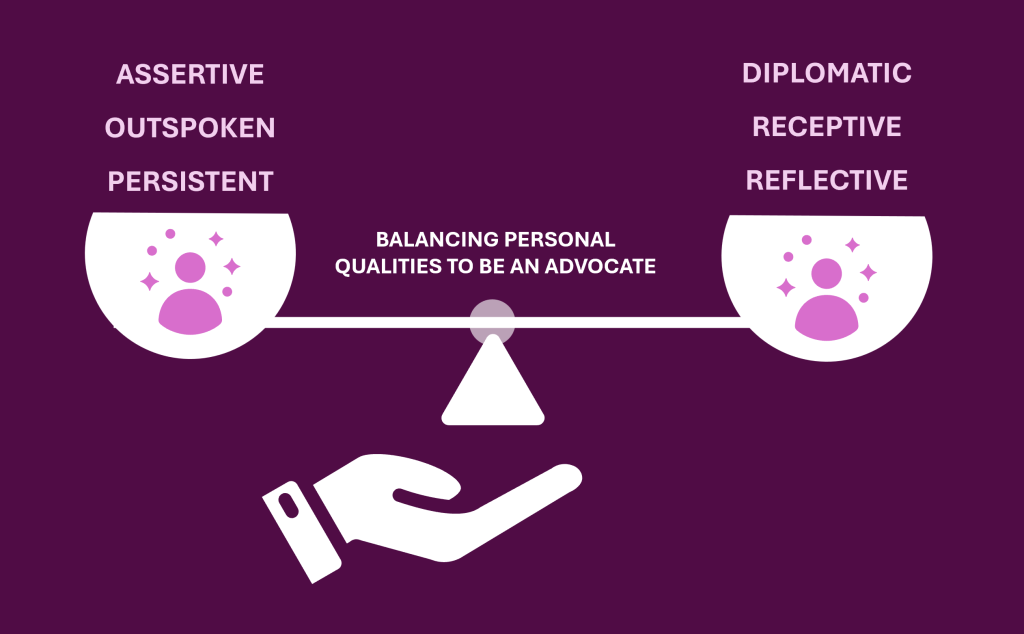
Advocacy is strategic communication – standing up and taking action – to make sure people are treated fairly and have what they need. When people are resistant to listening, seeing, speaking, and acting it perpetuates stigma. Advocates are people who communicate not just to speak, but to make change possible, to facilitate change, so that people are fairly treated.






ADVOCATES are people who communicate not just to speak, but to make change possible, to facilitate change, so that people are fairly treated. An advocate can help balance the scale of social justice by balancing their personal qualities needed for advocacy communication.
TYPES OF ADVOCACY
SELF-ADVOCACY – A person’s ability to speak up for their own needs, interests, and rights in ways that support their wellbeing.
INIDIVIDUAL/CASE ADVOCACY – Supporting or speaking up on behalf of another person to help them access their rights, services, or opportunities.
GROUP/SYSTEMS ADVOCACY – Collective action aimed at changing policies, systems, or social conditions that affect a community or population.
EXPLORE MORE
HIV, AIDS and The Human Rights Code (The Manitoba Human Rights Commission)
Advocacy (Action Canada for Sexual Health & Rights)
How to Be an Advocate for Yourself and Others + PDF Version (The Well Project)
Trauma-informed Care
Reduces stigma by recognizing that many people affected by HIV, STBBIs, or drug use have experienced trauma. It shifts the focus from “What’s wrong with you?” to “What happened to you?”, emphasizing safety, choice, respect, and empowerment. This approach prevents re-traumatization, challenges judgmental attitudes, and fosters more compassionate, person-centred interactions which directly helps reduce stigma in health and social services.
EXPLORE MORE
Trauma-informed practice resources (BC Mental Health & Substance Use Services)
Trauma- and Violence-Informed Care Foundations Curriculum (Equip Health Care)
Introduction to Trauma-Informed Care (Allison Free Online Courses)
Trauma and violence informed care toolkit (CPHA/C4S)