
Back to: HIV Stigma Workshop Kit
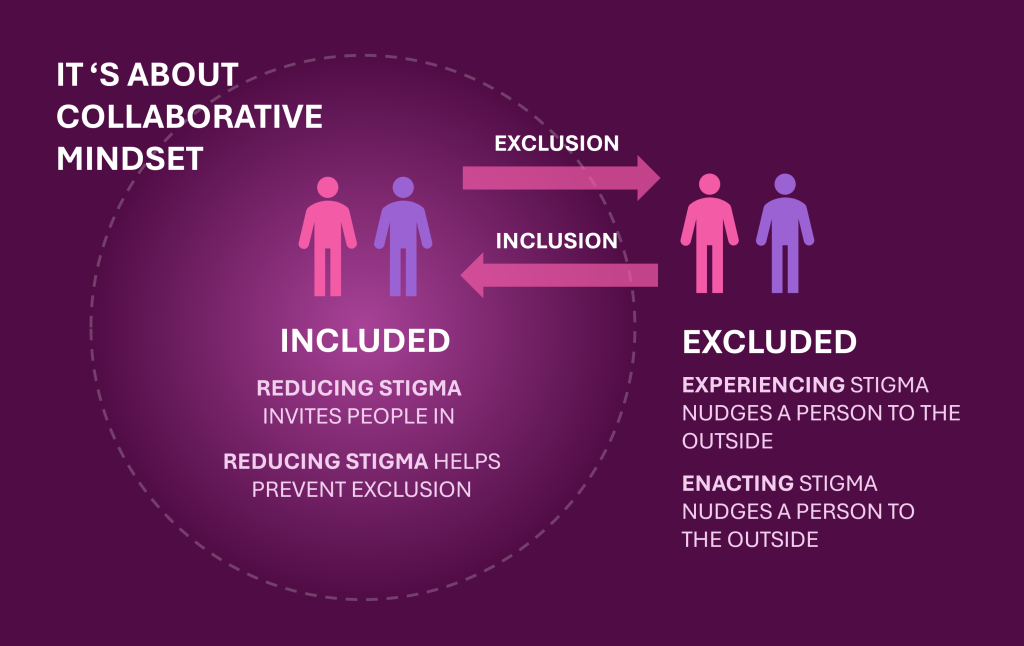
Collaboration begins with the spaces we create. An inclusive “zone of care” means that everyone – community members, peers, and providers – feels respected and welcomed. Think of the zone of inclusive care as a circle that people are invited into. When people are included, they feel safe to access services, share openly, and build trust. But if they’re excluded, whether intentionally or unintentionally, stigma pushes them to the outside. The goal is to constantly widen the circle of inclusion, so no one is left out.
Why it matters – Being in the zone ensures that everyone connected to harm reduction (community members, peers, and other providers) is included and mutually respected. When people are pushed out of the zone it result in exclusion and stigma increases.
How to do it
Your zone of inclusive harm reduction care is all about thinking collaboratively – having a collaborative mindset. It’s important to understand that a zone of inclusive care can be defined at the individual level, at the level of groups/organizations, or even at the scale of health systems. The larger the scope and scale, the more collaboration (that mainly involves communication) that would be required to create truly inclusive care.
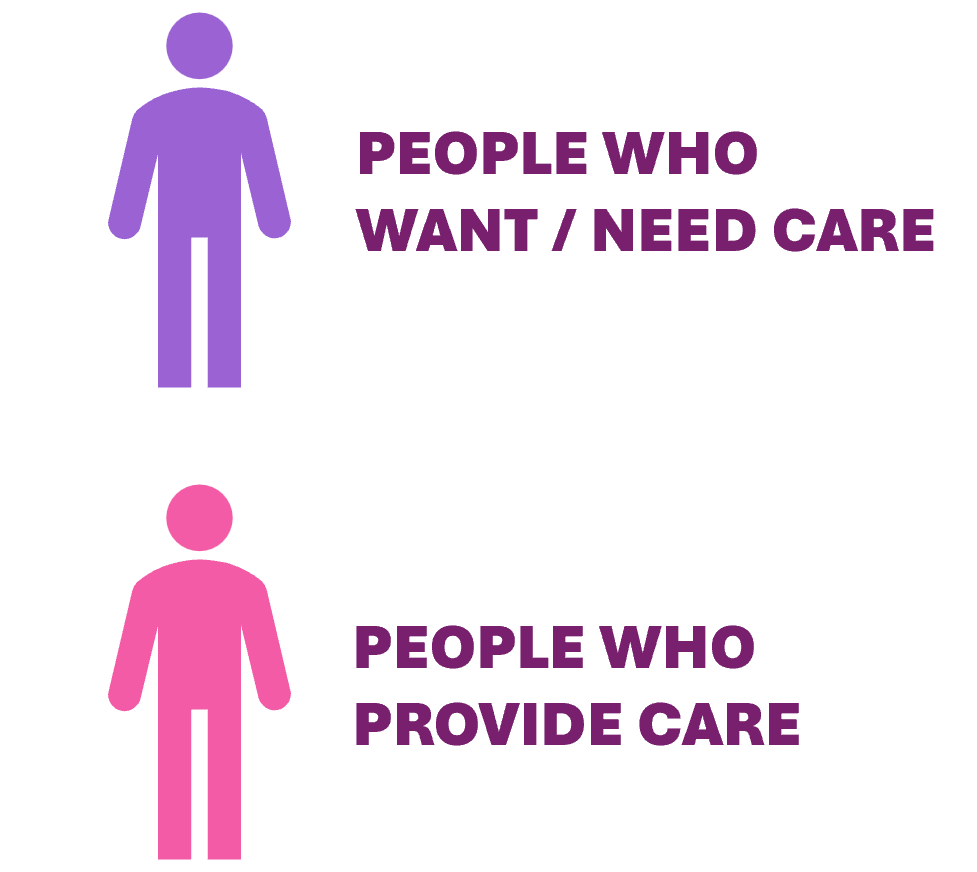
A zone of inclusive care involves two groups of people. People who need/want care who are the people harm reduction workers support, and people who provide care which includes harm reduction workers, healthcare professionals, and other people who provide support.
Take some time to think about the concept of being included, excluded, and ways that people either become included or excluded. Practice ways to include people – get them into the zone – to prevent stigma or reduce stigma, and keep them there. When stigma is enacted or is experienced significantly, it nudges people out of the zone, they can become excluded, making it more difficult to properly access harm reduction services.
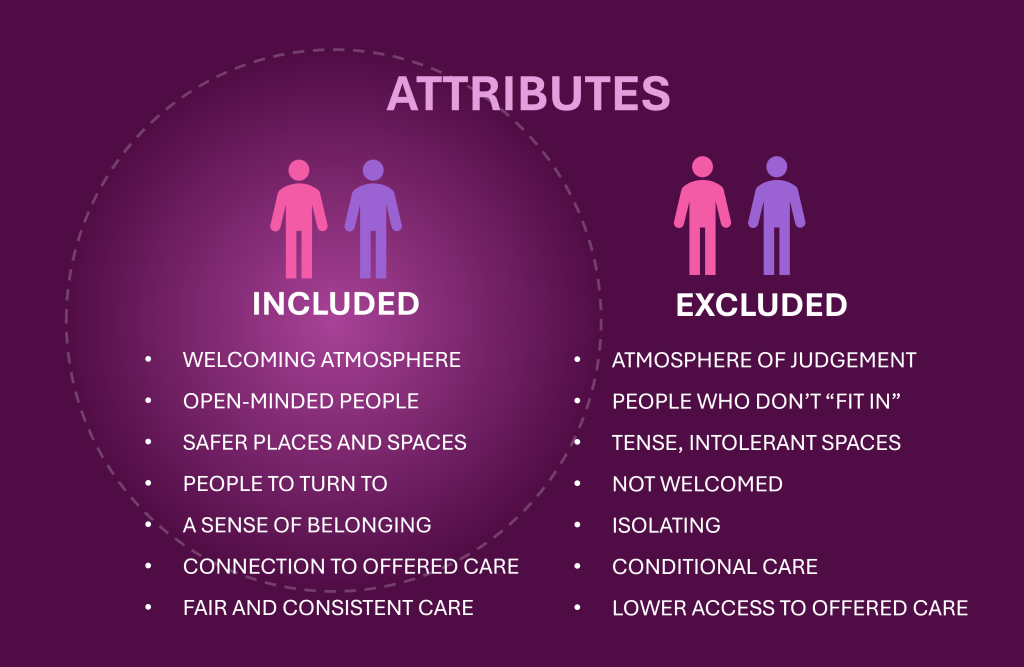
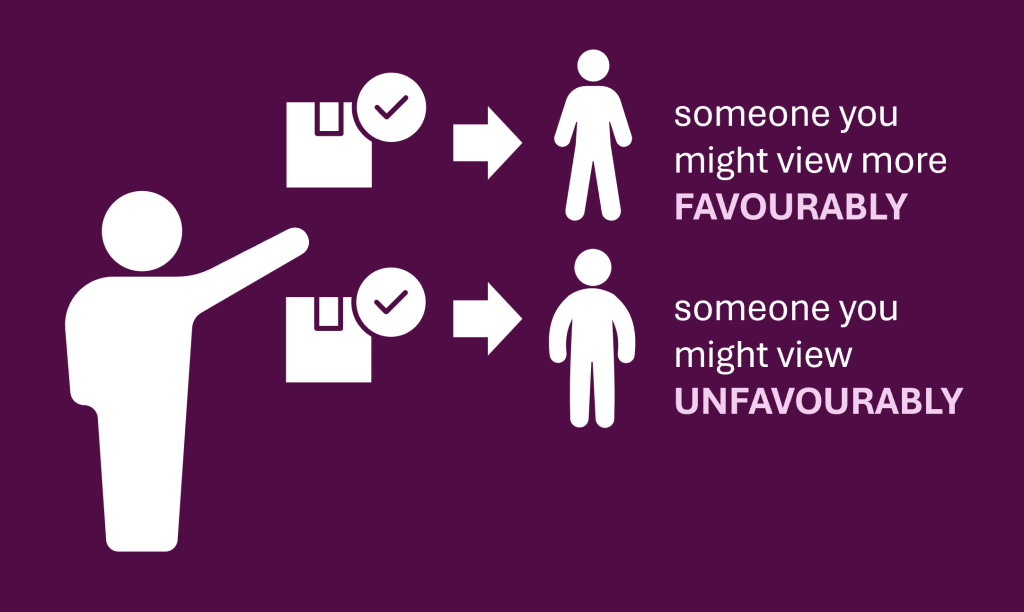
Delivering EQUAL harm reduction care regardless of what your attitude is about them is being objective. It is an act of inclusion.
EXPLORE MORE
Employer’s Guide to Supporting & Engaging Peer Workers (Peer Connect BC)
Provincial Peer Support Worker Training Curriculum (Peer Connect BC)
PWLE Strengths in the Face of Stigma Study: Findings and Recommendations (PAN)
Rural Community Health Toolkit (Rural Health Information Hub)
Evidence for eliminating HIV-related stigma and discrimination (UNAIDS)
Confronting Discrimination (UNAIDS)