
Back to: HIV Housing Toolkit

SURR Communities
The health of people living with HIV is an essential service tied to housing stability. Focusing on smaller urban, rural and remote areas of BC, the organizations listed in this section can support housing service providers in understanding the distinctive and intersecting barriers to accessing healthcare.
BC Rural Health Network
Based in Princeton, the BC Rural Health Network is a provincial network of healthcare advocacy organizations which focuses on improving health outcomes in rural and remote British Columbia communities. It provides a service which helps to connect healthcare providers, communities, individuals, and organizations in order to exchange knowledge and advocate for rural healthcare equity.
First Nations Health Authority – eHealth and Virtual Health
First Nations Health Authority is an Indigenous-led provincial health authority in British Columbia. Their community-based services are largely focused on health promotion and disease prevention, and focus on culturally safe, community-led models of care.
Rural Coordination Centre of British Columbia
The Rural Coordination Centre of British Columbia is a network of rural healthcare workers and administrators, community members, policymakers, educators, researchers, and business leaders. Their work holds a focus on improving healthcare delivery across rural and remote British Columbian communities through research initiatives, education and training, and system coordination.
Northern Health – HIV
As one of British Columbia’s regional health authorities, Northern Health serves the large region of Northern British Columbia, where there is a lesser population spread around a larger area of land, thus, being where the majority of SURR communities can be found.
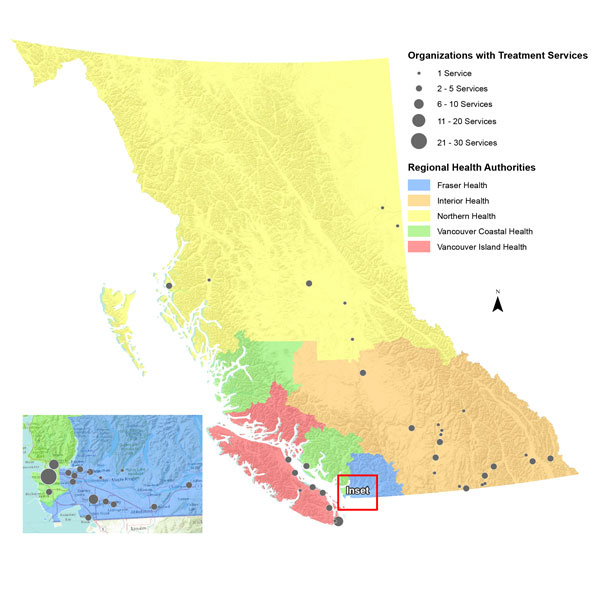
This is a map of the “[g]eographic distribution of organizations that provide HIV-specific treatment services in British Columbia” (Jessani & Brondani, 2019, p. 4) found within a 2019 study on the availability of medical and oral health services for PLWH in B.C., published in the Journal of the Canadian Dental Association. This specific map highlights the lack of services available, showing the need for a resource that shows where accessible services are located.
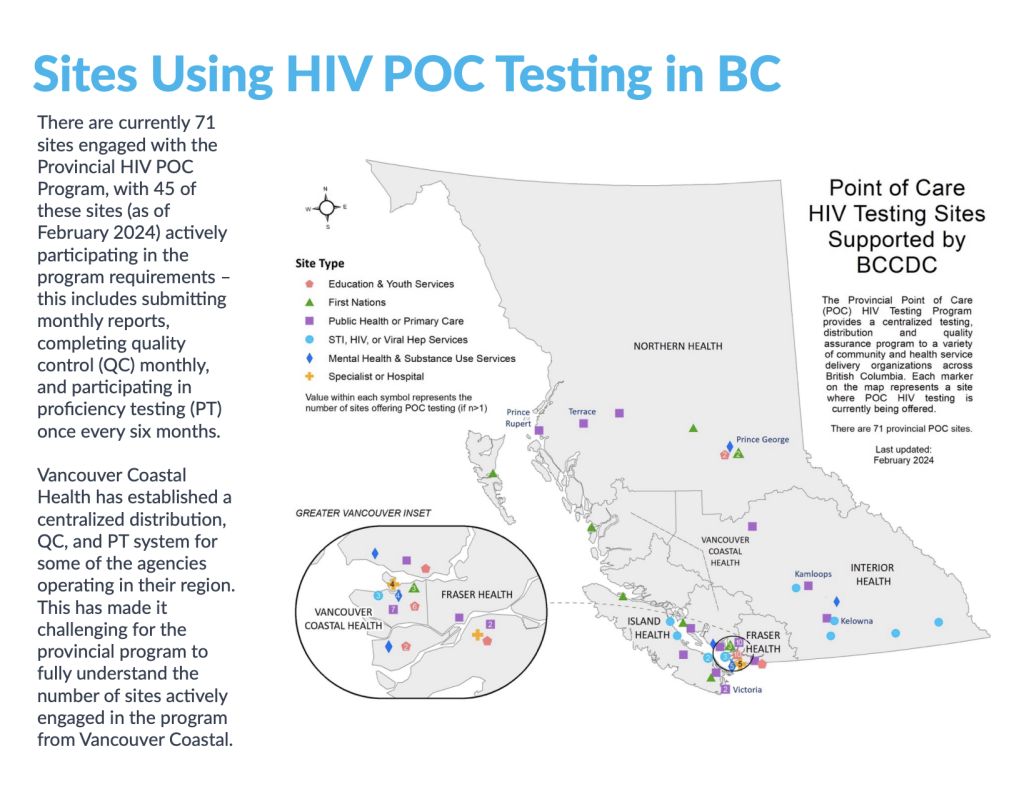
HIV point of care (POC) testing in BC continues to be an attractive testing option where available and accessible, especially in SURR communities. The map below was published by the BCCDC and Provincial Health Services Authority (PHSA) in February 2024 and shows provincial locations of sites that engage point of care testing.

People New to Canada
For people who are new to Canada, stable and safe housing is closely connected to HIV health and overall well-being. Housing insecurity can make it harder to access HIV testing, treatment, prevention, and ongoing care. People living with HIV are more likely to maintain their health and remain connected to care when they have secure housing, while newcomers at risk of HIV benefit from housing environments that support safety, social connection, privacy, and access to health and settlement services.
Ribbon Community Vancouver
Provides community-based support for PLWH in Lower Mainland B.C., including assistance with accessing healthcare, housing, financial support and social support. This resource strengthens the website’s connection to local community organizations that address both HIV stigma and the social determinants of health, such as housing insecurity and income instability.
Care for Newcomers Clinic (Vancouver Coastal Health)
This resource explains a Vancouver Coastal Health program that has a focus on assisting newcomers through the B.C. healthcare system. The clinic assists patients through the Medical Service Plan (MSP) process for becoming eligible, access to healthcare services as a non-resident and connecting to specialized care such as HIV treatment and support services.
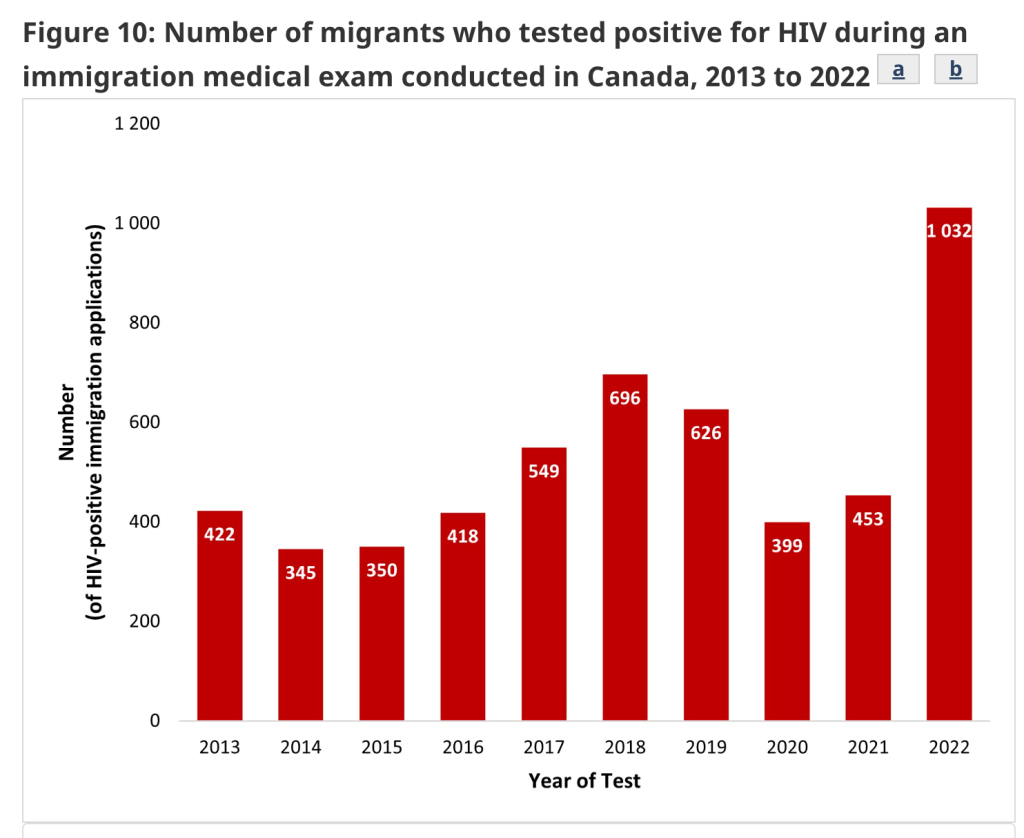
This table depicts the “number of migrants who tested positive for HIV during an immigration medical exam conducted in Canada, 2013 to 2022.” It shows the rising trends of HIV as a larger influx of immigrants have arrived in Canada, leading to higher numbers of HIV positive individuals during immigration medical exams.
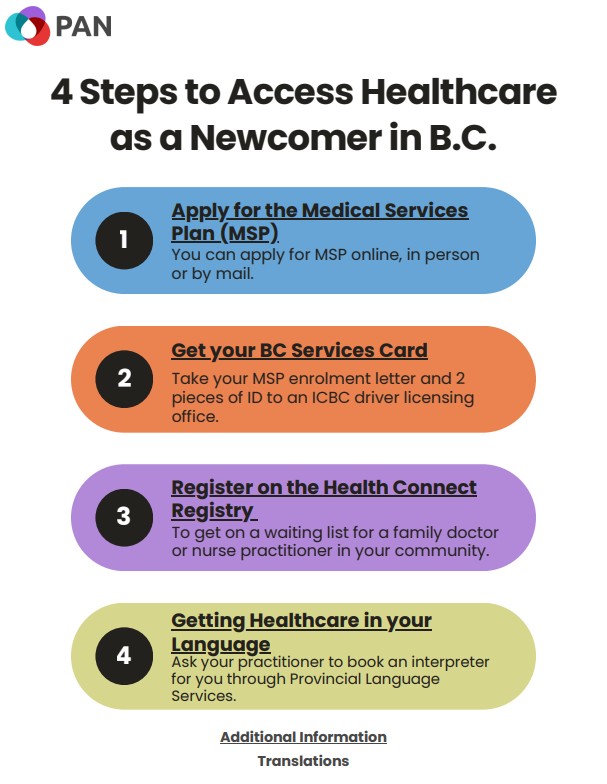
CLICK HERE to access a 4-step guide that aims to assist newcomers to British Columbia in accessing healthcare services. The PDF download contains hyperlinks to Government of BC or Provincial Health Services Authority websites which hold the applicable information for each topic.