
Back to: COPY of HIV Stigma Workshop Kit
Transmission is how HIV (or another viruses or bacteria) moves from one person who has it to another person who can get it. This happens through specific pathways like certain body fluids entering the body which allows the virus to pass between people. This step is part of what’s called the “chain of infection,” which explains how infections spread from one person to another.
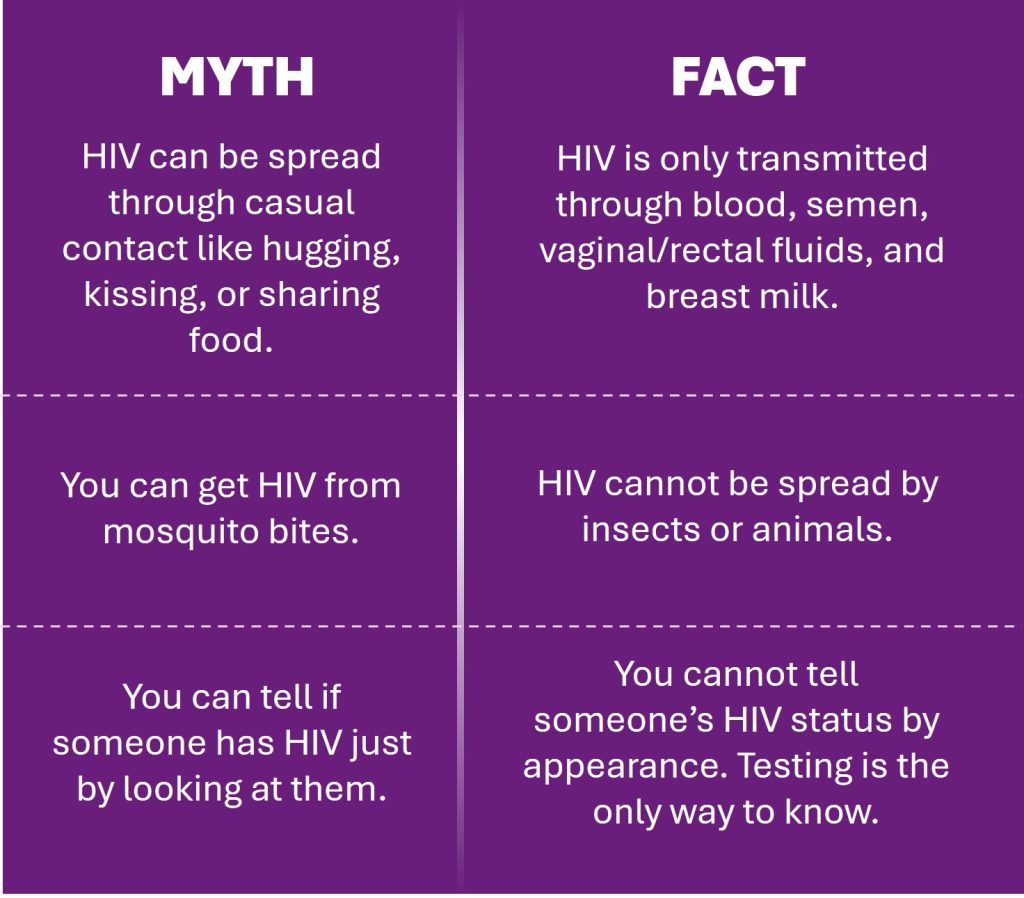
HIV is transmitted through specific body fluids like blood, semen, vaginal and rectal fluids, and breast milk. The main modes of transmission are unprotected sexual contact, sharing needles or injection equipment, from mother to child during pregnancy, birth or breastfeeding, and through blood transfusions where blood is not screened. HIV is not spread through everyday contact such as hugging, kissing, sharing food, or mosquito bites.
EXPLORE MORE
HIV Basics (CATIE) – HIV overview with a focus on transmission